

Advertising seems to be blocked by your browser.
The ads help us provide this software and web site to you for free.
Please support our project by allowing our site to show ads.
Home /
Manufacturers /
ESG-SHV /
SCA Hotswap Backplane /
SCSI/ProcessorESG-SHV_SCA_HSBP_M17_____ /
6.1.7600.16385 Jun 21, 2006
Download and install ESG-SHV SCA Hotswap Backplane driver
SCA Hotswap Backplane is a Chipset device. This Windows driver was developed by ESG-SHV. The hardware id of this driver is SCSI/ProcessorESG-SHV_SCA_HSBP_M17_____.
1. ESG-SHV SCA Hotswap Backplane driver - how to install it manually
- Download the setup file for ESG-SHV SCA Hotswap Backplane driver from the link below. This download link is for the driver version 6.1.7600.16385 released on 2006-06-21.
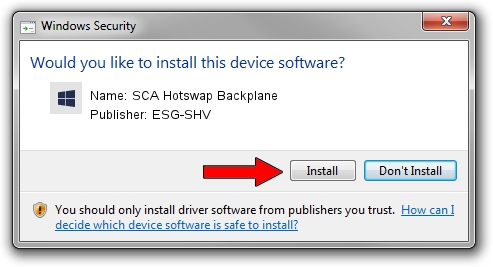
- Run the driver setup file from a Windows account with administrative rights. If your UAC (User Access Control) is running then you will have to confirm the installation of the driver and run the setup with administrative rights.
- Go through the driver setup wizard, which should be quite easy to follow. The driver setup wizard will scan your PC for compatible devices and will install the driver.
- Restart your PC and enjoy the new driver, as you can see it was quite smple.
Driver file size: 0 bytes (0 B)
Driver rating 3.7 stars out of 45650 votes.
2. Using DriverMax to install ESG-SHV SCA Hotswap Backplane driver
The most important advantage of using DriverMax is that it will setup the driver for you in just a few seconds and it will keep each driver up to date. How can you install a driver with DriverMax? Let's take a look!
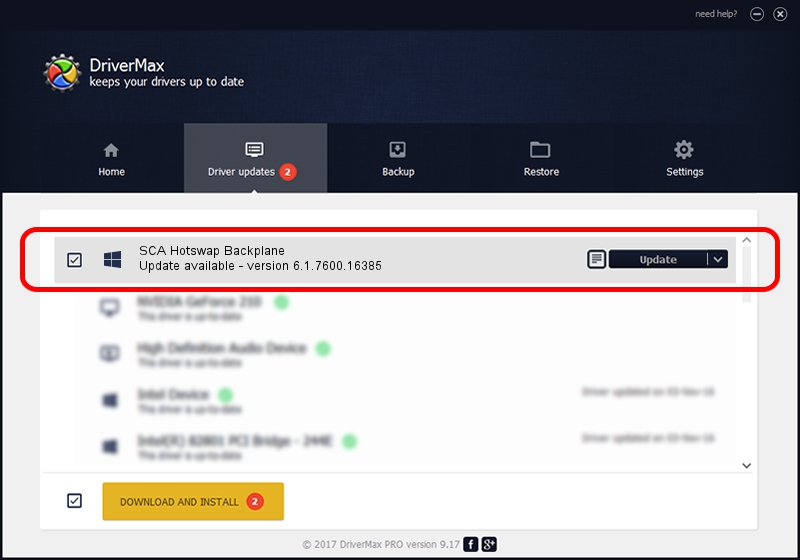
- Open DriverMax and push on the yellow button that says ~SCAN FOR DRIVER UPDATES NOW~. Wait for DriverMax to scan and analyze each driver on your PC.
- Take a look at the list of available driver updates. Search the list until you find the ESG-SHV SCA Hotswap Backplane driver. Click the Update button.
- That's it, you installed your first driver!